
Insolvency Consulting
Author
Administrator Admin
Date Published

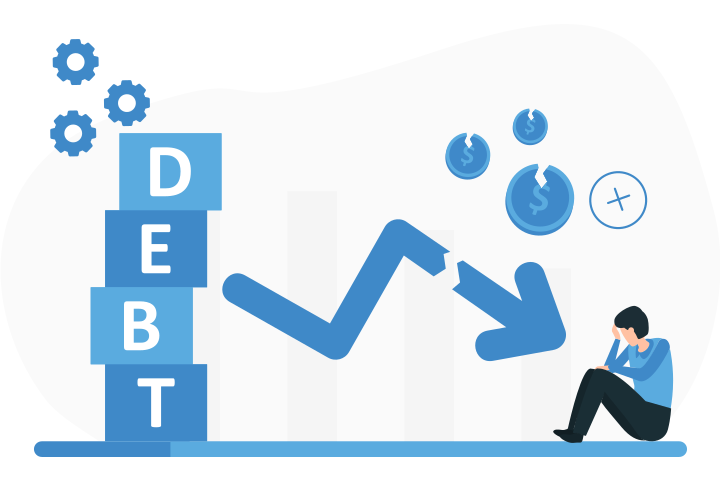
Insolvency is not the end of the road, but a crossroads. How to choose the right direction?
Insolvency. It is, perhaps, one of the most feared words in an entrepreneur's vocabulary. It is often associated with failure, shame, and the end of the road. But what if we told you that this perspective is not only pessimistic but also fundamentally wrong? In reality, insolvency law was not created to punish, but to provide an orderly framework for managing a financial crisis. Insolvency is not an end of the road, but a critical intersection. One direction may lead to a controlled closure, but the other can lead to the rebirth of the business, stronger and more efficient. Choosing the right direction depends on the decisions made at a moment of maximum pressure.
It is important to understand that financial difficulties are not always the result of poor management. In a volatile economic environment, external factors such as a deterioration of general market liquidity or chain financial blockages can push even an otherwise healthy company towards the inability to pay.
Warning Signs - When should you call a consultant?
As with a medical condition, early intervention is crucial. The faster you act, the more options you have at your disposal. Ignoring these signs doesn't make them disappear; it only reduces your room for maneuver. Here are a few "symptoms" that should prompt you to seek the advice of a specialist immediately:
Constant pressure on cash flow: You are constantly "juggling" payments, delaying suppliers to be able to pay salaries.
Systematic payment delays: Debts to suppliers, the state, or banks regularly exceed their due dates.
Accumulation of debt: The balance of debts increases from one month to the next, with no clear prospect of reduction.
Threats of legal action: Creditors begin to send notices and threaten with enforcement proceedings.
The law defines the presumed state of insolvency as when a debtor has not paid their debt to one or more creditors for 90 days after the due date. Waiting until this point often means losing the initiative.
"Reorganization or Liquidation?" - Explaining the options
Once the insolvency procedure is opened, the road forks. The strategic decision, made together with the judicial administrator and your consultant, is between reorganization and liquidation.
Judicial Reorganization: This is, in essence, a "treatment" plan for the business. The goal is to save the company. This is done by developing a reorganization plan that may include measures such as rescheduling debts, optimizing operations, selling non-essential assets, or attracting new investments. This plan must be realistic and convince the creditors and the syndic judge that the company can become viable again.
Bankruptcy Procedure (Liquidation): This is the "radical surgical intervention." It is applied when reorganization is not possible or fails. In this case, the company's assets are sold by a judicial liquidator, and the amounts obtained are distributed to the creditors, according to a priority order established by law. The goal is an orderly and equitable closure of the business.
All these procedures are public and can be followed in the Insolvency Procedures Bulletin, an official resource managed by the ONRC (National Trade Register Office).
The Role of the Consultant: Navigator, Negotiator, Strategist
In such a turbulent period, the role of a specialized consultant is essential:
Navigator: Guides you through the legal and procedural labyrinth, "translating" legal terms and ensuring you comply with all deadlines and obligations.
Negotiator: Acts as an objective buffer between you and the creditors. A good consultant can mediate and negotiate a reorganization plan acceptable to all parties, avoiding conflicts that can lead to deadlocks.
Strategist: Helps you objectively assess whether reorganization is a viable option and, if so, to build a credible business plan that will form the basis of the reorganization plan.
Mismanaging an insolvency procedure can destroy not only assets but also the reputation and business relationships built over years of work. A professional approach, guided by a consultant, can minimize the damage and can keep bridges open for a new future, either for the reorganized company or for you, as an entrepreneur, in a new project.
Conclusion: A strategic decision, not an act of desperation
Turning to a consultant specializing in insolvency is not an act of surrender. It is a mature and strategic management decision. It means taking control of a crisis situation, exploring all available options, and fighting for the best possible outcome, whether that means saving the business or protecting the remaining value.
If you recognize the warning signs in your business, do not delay. A confidential discussion now could save your business tomorrow.